ANTIMINS OR ANTIMENSION
(Greek word meaning “in place of the table”) By Metropolitan Saba (Isper)
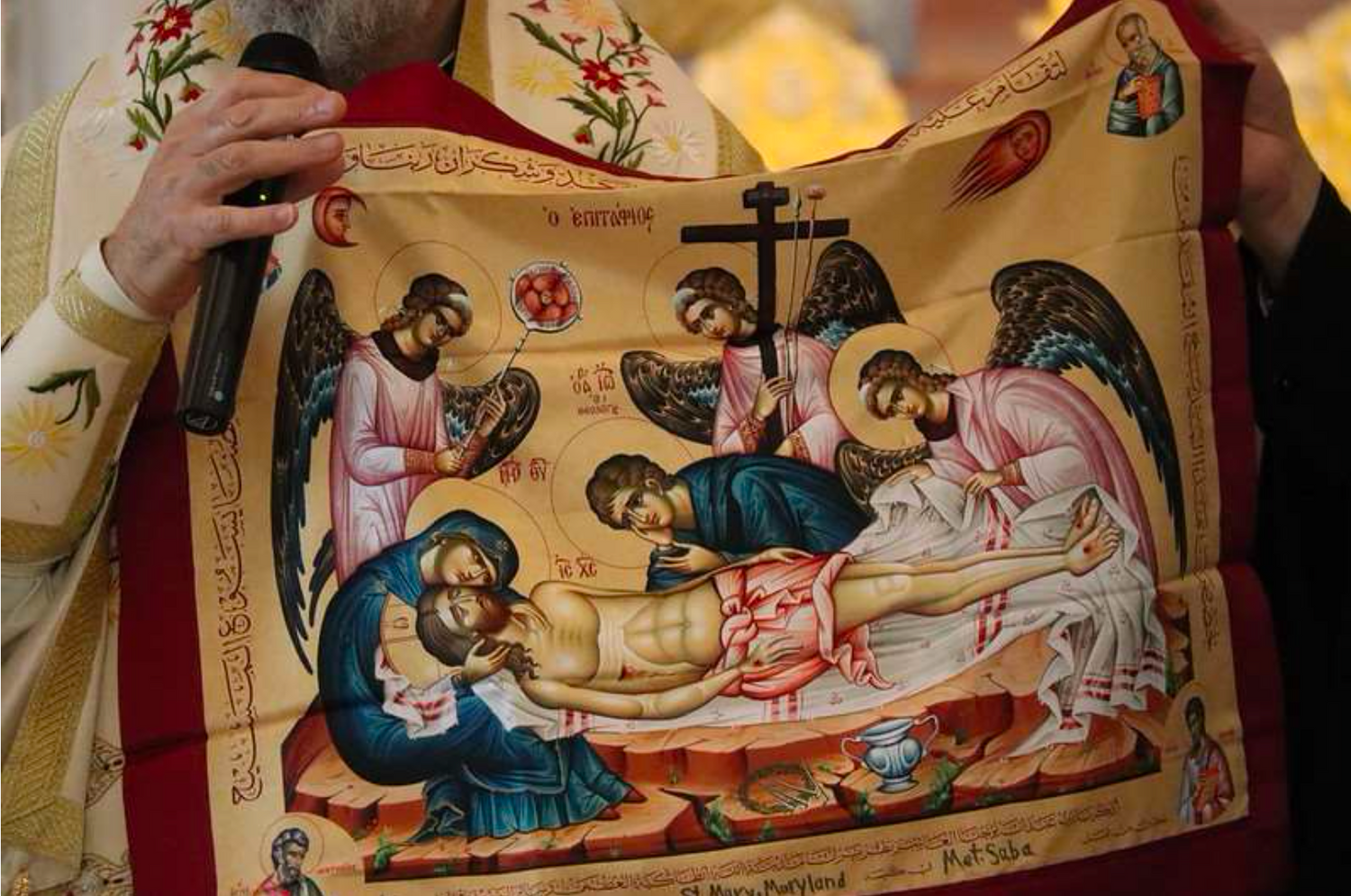
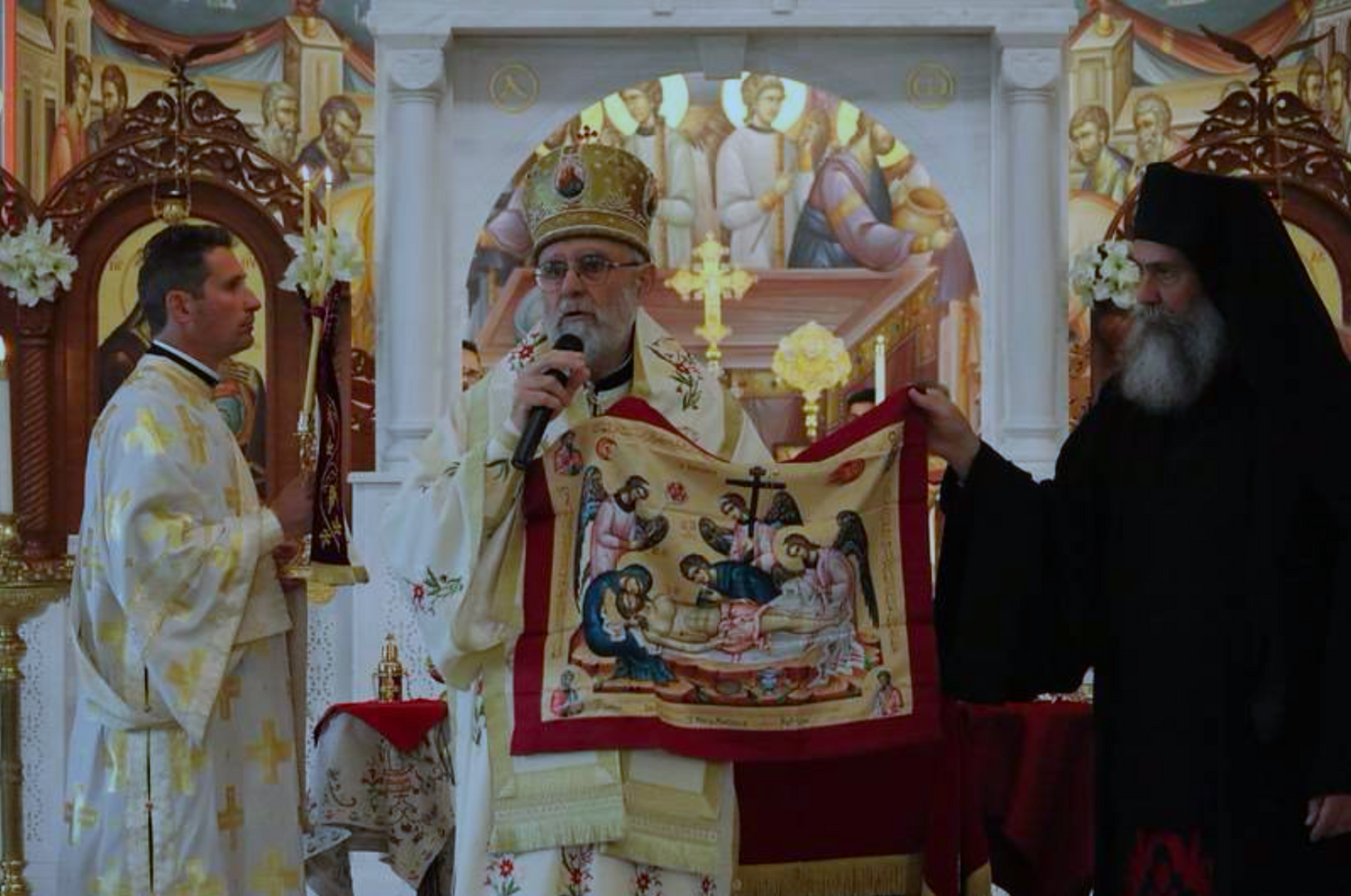
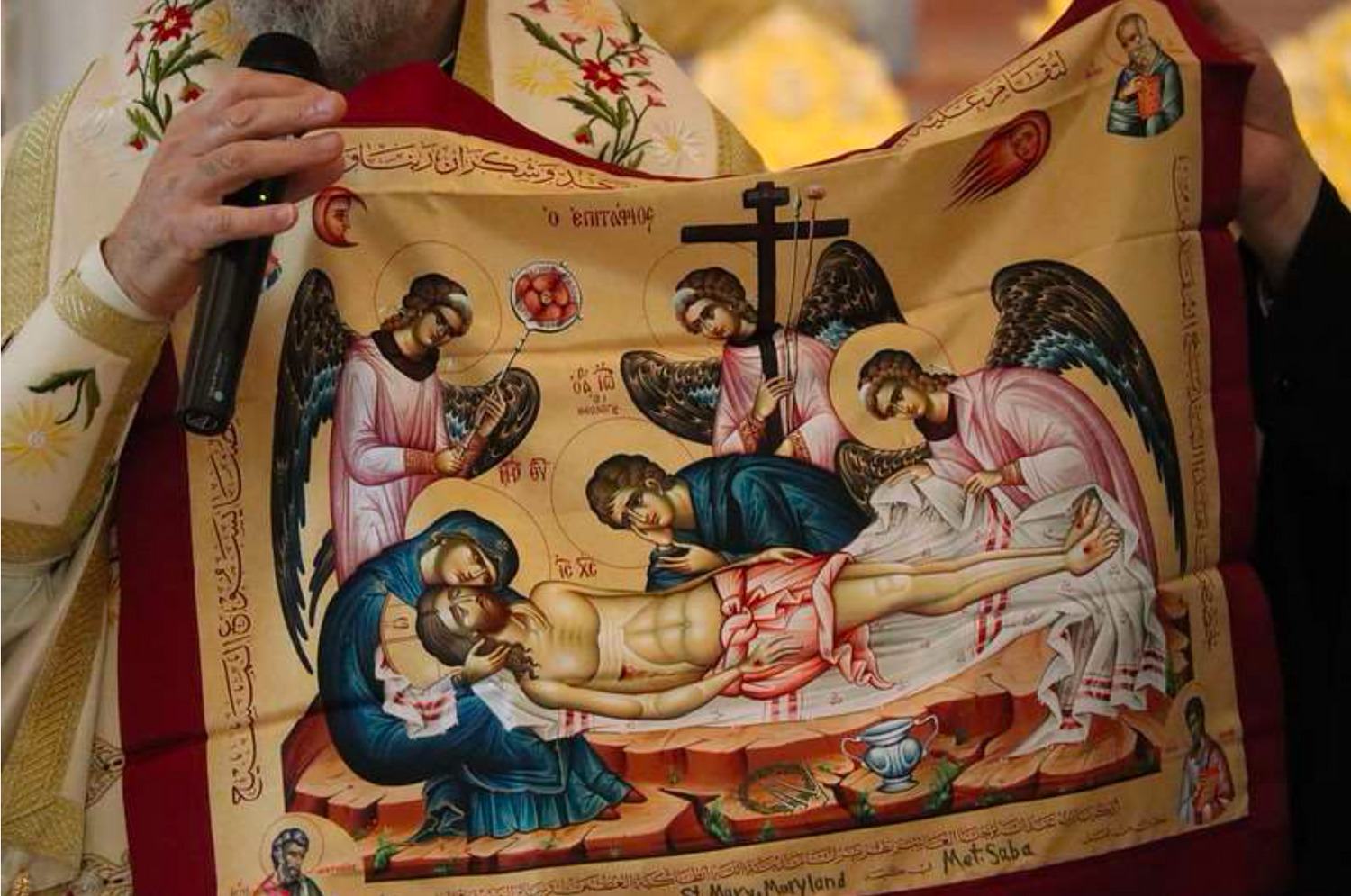
In the Orthodox Christian liturgical tradition, the antimins is among the most important liturgical necessities used in the altar during the Divine Liturgy. It is a type of icon, a rectangular cloth, traditionally sewn of either linen or silk. Beautifully embellished, it always reflects the image of Christ’s entombment and the four Evangelists.
The antimins is inscribed with the text from the Holy Saturday Troparion: “The noble Joseph, taking down Thy most pure body from the Tree, wrapped it in fine linen and sweet spices and laid it in a new tomb.”
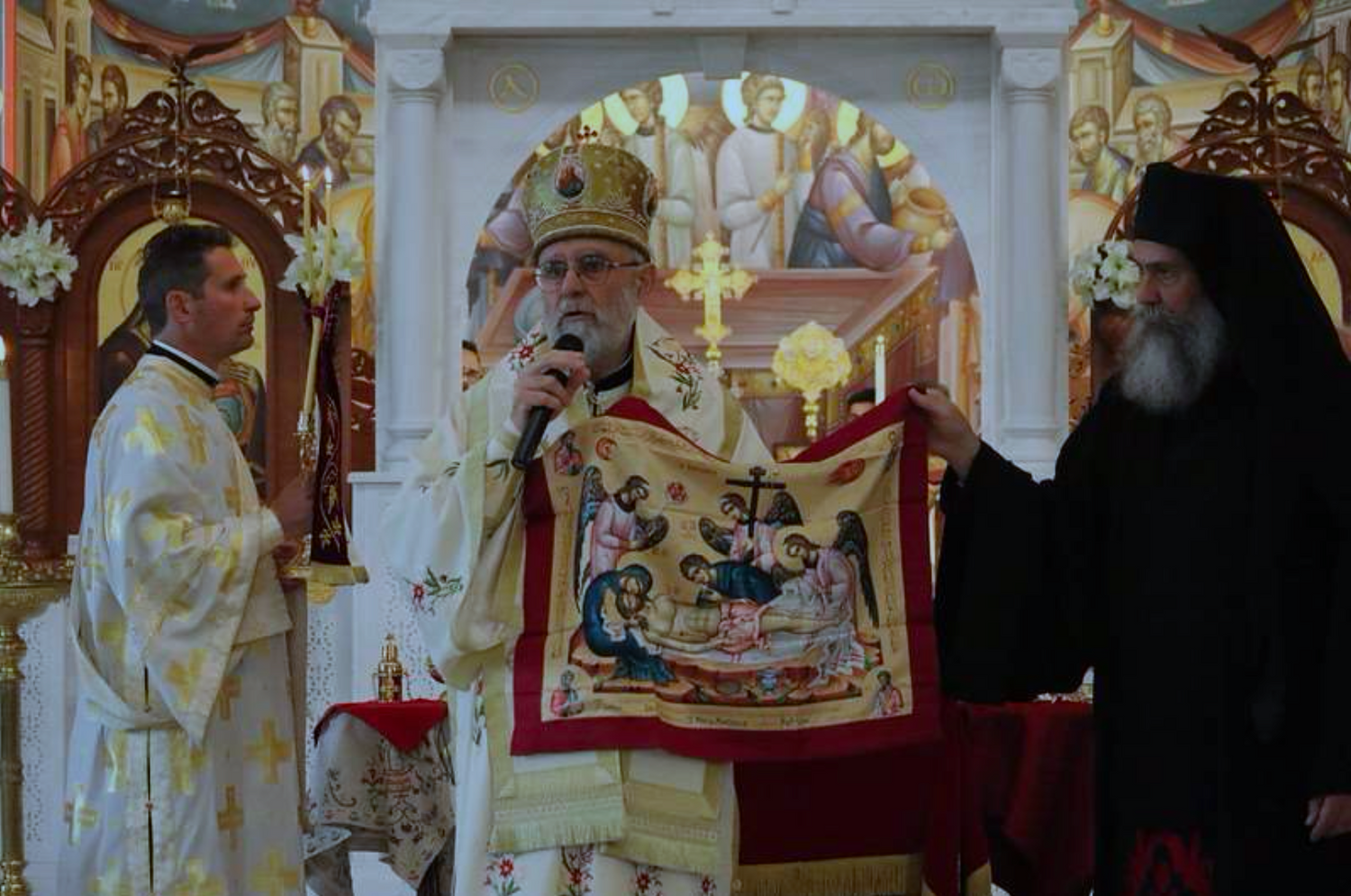
The antimins, once properly folded, sits in the center of another slightly larger cloth called the eileton, by which it is completely encased and protected. The two (which are folded in nearly the same manner) are then placed in the center of the altar table, underneath the Gospel Book, and unfolded only during the Divine Liturgy, in the moments before the Great Entrance.
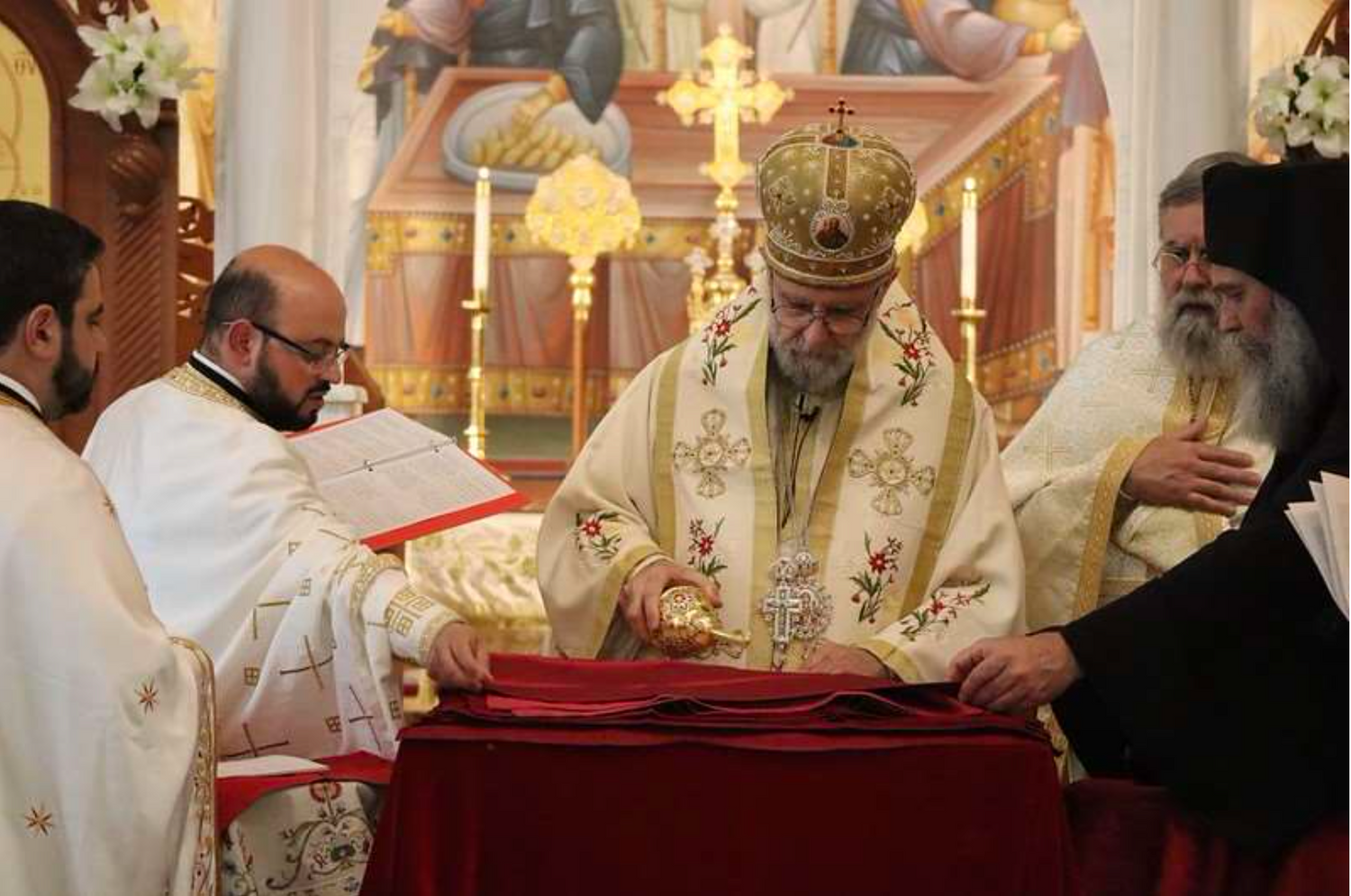
The antimins became the sign of unity at the level of the archdioceses of the same patriarchal see, as well as at the level of the parishes of the same archdiocese. Therefore, when a new patriarch is elected, a new antimins is printed in his name and sent to all the archdioceses of the whole See to be consecrated by every metropolitan in his archdiocese, who puts his own signature on it. And whenever a new metropolitan is elected, he asks the patriarch for the number of antiminsia his archdiocese needs, and then he consecrates them in a service known as the "Antimins Consecration Service" and adds his signature to each one. He then collects the old antiminsia and distributes the new ones.
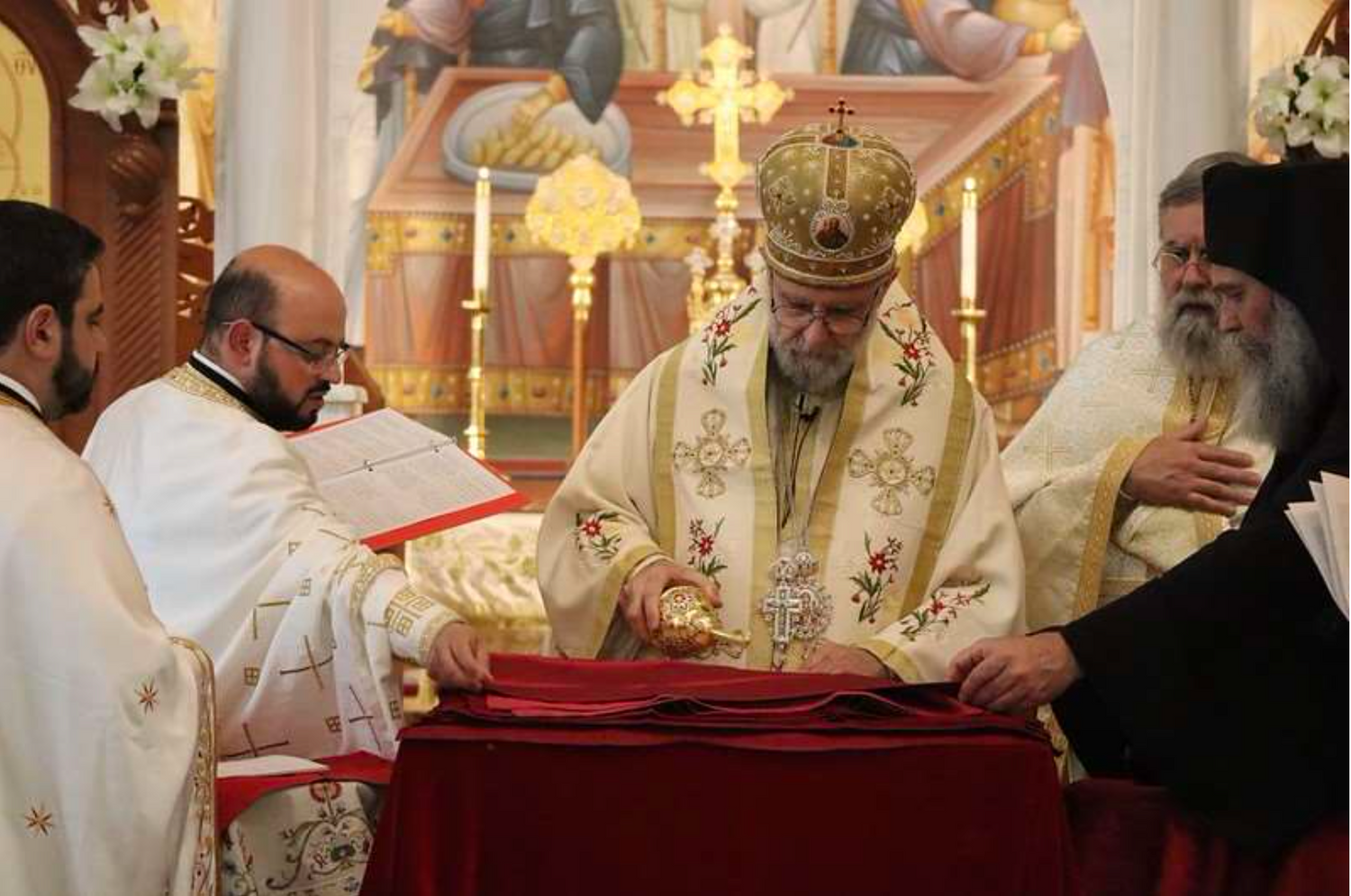
The metropolitan’s signature on the antimins signifies the authorization given by the metropolitan to the priests in his archdiocese to perform the Liturgy. Also it is a symbol of the unity that exists between the bishop, the clergy, and the faithful.
In the early Christian centuries, the bishop served the Divine Liturgy, assisted by priests, known as “elders” (presbyteroi, in Greek). It was customary for the Divine Liturgy to be held in one place in the city, but as the cities grew and the number of Christians increased, churches were built in every parish of the faithful, and thus,
The bishop authorized the priests to hold the Divine Liturgy in their parishes. The Orthodox liturgical tradition still preserves this tradition until today.
The Typikon requires the priest who celebrates the Divine Liturgy in the absence of the bishop, to bow in front of the episcopal throne before the Divine Liturgy, as a sign of obtaining the authorization to celebrate the Divine Liturgy from the bishop.
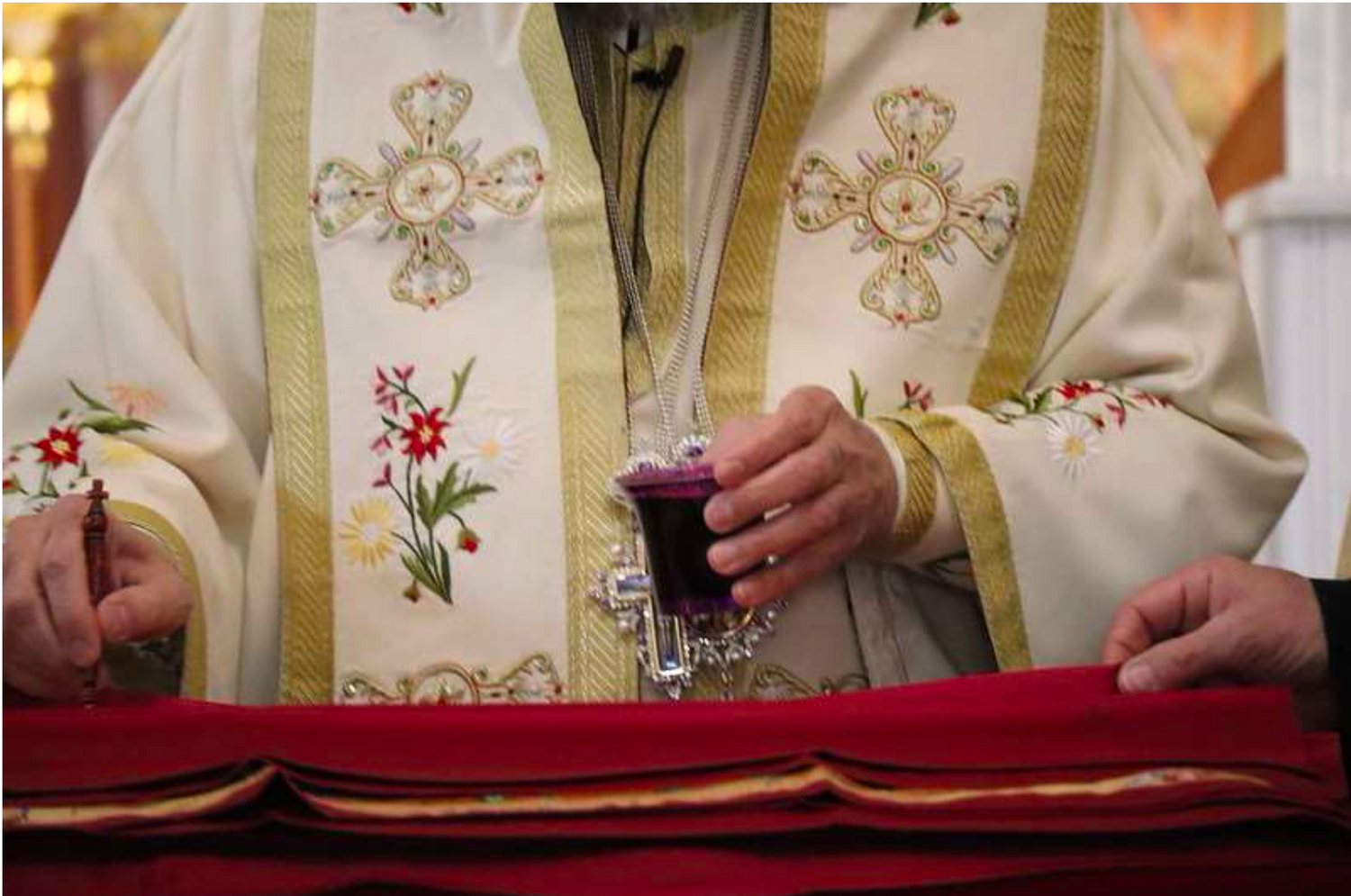
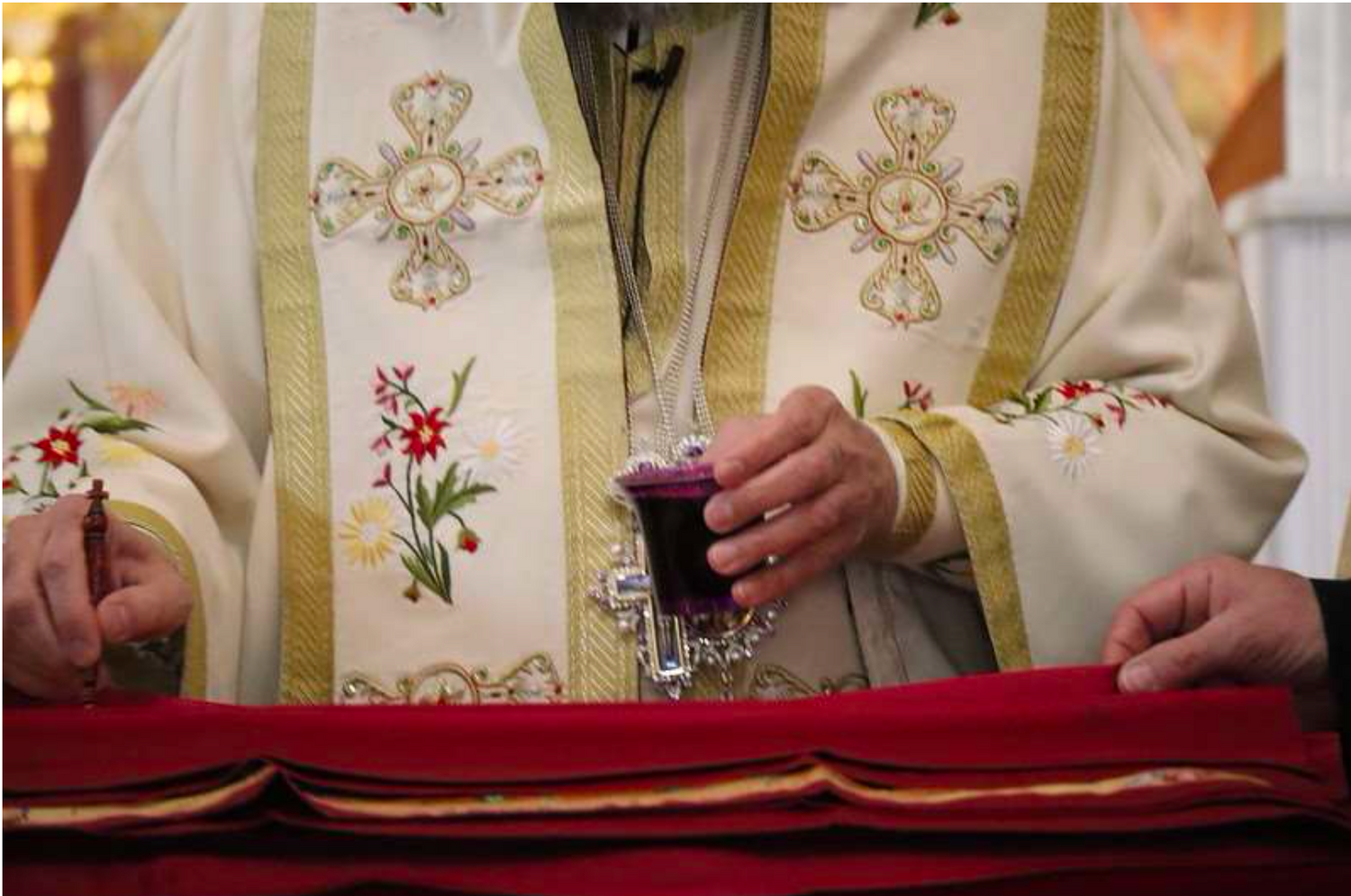
A small piece of a martyr’s relic is ceremoniously and prayerfully placed in a small pocket at the top of the antimins as each one is consecrated. It is an essential component, without which the Holy Eucharist cannot be celebrated. The relic should exclusively come from a martyr because the Church was founded on the blood of martyrs and the Divine Liturgy used to be celebrated on the tombs of martyrs, in the early Christian centuries.
The Divine Sacrament which is held on the antimins is a real, bloodless, and living sacrifice, drawing on the bloody sacrifice of the Cross.
In very exceptional situations, where there were no consecrated liturgical items to hold the Divine Liturgy, priests performed the Divine Liturgy with simple
instruments on the chest of a baptized and chrismated Orthodox Christian believer, as was done during World War II.
The placement of the relics in the antimins originates from the service of consecrating the Holy Table in the Holy Altar. Therefore, the antimins is considered a mobile altar, and if necessary, the Divine Liturgy can be held on it even if the altar table has not yet been consecrated. In addition, the Divine Liturgy can be held on the antimins anywhere outside the church.
The antimins also serves in the preservation of particles (crumbs) that may fall from the dividing and cutting of the Holy Lamb; particles fall on it, and the priest collects and places them in the Holy Chalice after Communion.
Finally, great care should be taken not to stain or damage the antimins in any way, including never washing or dry cleaning it. The antimins has already been cleaned and protected against spills and stains of any kind. Should the antimins become worn, torn, or damaged, please contact the metropolitan’s office for instructions on the return and replacement protocol.
(Photos of His Eminence Metropolitan Saba consecrating the antimins were taken at St. Mary Antiochian Orthodox Church in Hunt Valley, Maryland, during the Vigil of the Holy Ascension on Wednesday, May 24, 2023.)
الأ نديميسي
(كلمة يونانية تعني "مكان الطاولة")
المتروبوليت سابا (اسبر)
يعتبر الأنديمنسي، بحسب التقليد المسيحي الأرثوكسي الليتورجي، من بين اللوازم الليتورجية الأهم لإقامة القداس الإلهي. إنه قطعة قماش من الساتان أو الحرير، مستطيلة الشكل مطبوع عليها أيقونة المسيح في القبر، مع الإنجيليين الأربعة في زواياها الأربعة، بالإضافة إلى دمل من كنالبة
تتعلق بالإفخارستيا.
توجد على جوانبه الأربعة كتابات من طروبارية السبت العظيم: "إن يوسف النتقي أحدر جسدط الطاهر من العود، ولفه بالسباني النقية وحنطه بالطيب وجهزه ووضعه في قبر جديد."
يوضع الأنديمنسي في وسط المائدة المقدسة ضمن قطعة قماش مستطيلة أكبر منه تسمى "الغطاء"، تكون بمثابة محفظة تحفظ الأنديمنسي وتحميه من الغبار. يطوى الأنديمنسي وغطاؤه بالطريقة ذاتها تقريبا، ويوضع كتاب الإنجيل المقدس فوقهما، ويفتحا خلال القداس الإلهي فقط،
بعد الدورة الكبرى.
صار الأنديميسي علامة الوحدة على صعيد أبرشيات الكرسي البطريركي الواحد كما وعلى صعيد رعايا الأبرشية الواحدة. لذلك عندما يتم انتخاب بطريرك جديد يطبع أنديمنسي جديد باسمه ويرسله إلى جميع أبرشيات الكرسي الأنطاكي ليكرسه كل ميتروبوليت في أبرشيته ويضع عليه توقيعه. كذلك عندما يدخل ميتروبوليت جديد إلى أبرشيته يطلب من البطريرك عددا من الأنديمنسي التي تحتاجها الأبرشية ويكرسها في خدمة تعرف بـ "خدمة تكريس الأنديمنسي" ويضع عليها توقيعه،
ومن ثم يجمع الأنديمنسي القديم ويوزع الجديد بدله.
توقيع الأسقف على الأنديمنسي دلالة على التفويض الذي يمنحه الأسقف للكهنة في أبرشيته كي يقيموا الذبيحة الإلهية بدورهم، ورم از للوحدة القائمة بين الأسقف والكاهن والرعية. كان الأسقف يقوم بخدمة القداس الإلهي في القرون المسيحية الأولى، يعاونه الكهنة الذين كانوا يعرفون بالشيوخ )presviteros(، لأن العادة جرت أن يقام القداس الإلهي في مكان واحد في المدينة. ولما كبرت المدن وازداد عدد المسيحيين وبنيت الكنائس في كل تجمع للمؤمنين صار الأسقف يفوض الكهنة بإقامة القداس الإلهي في رعاياهم. وقد حفظ التقليد الليتورجي الأرثوذكسي هذا الأمر حتى اليوم. فقد طلب التيبيكون من الكاهن، في حال عدم وجود الأسقف معه عند إقامة الذبيحة الإلهية أن ينحني بعد أخذه الكيرون أمام العرش الأسقفي رسما لاستمداده التفويض بإقامة القداس الإلهي
من الأسقف.
يفتح في أعلى الأنديمنسي جيب صغير يوضع فيه خلال خدمة التكريس جزء صغير من ذخائر قديسين شهداء حص ار، لأن الكنيسة قامت على دماء الشهداء، وكانت الذبيحة الإلهية تقام في
القرون المسيحية الأولى على أضرحة الشهداء. كما أن الذبيحة الإلهية التي ستوضع على الأنديمنسي ليست سوى رسما حيا حقيقيا وغير دموي لذبيحة الصليب الدموية. في الأوضاع الاستثنائية جدا حيث لا يتوفر شيء من اللوازم المكرسة لإقامة القداس الإلهي، كما جرى خلال الحرب العالمية الثانية، كان بعض الكهنة يقيمونالقداس الإلهي بأدوات بسيطة على صدر أحد
المؤمنين المعمدين معمودية أرثوذكسية قانونية.
يأتي وضع الذخيرة في الأنديمنسي من خدمة تكريس المائدة المقدسة في هيكل الكنيسة، لذلك يعتبر الأنديمنسي مذبحا متنقلا؛ يمكن إقامة الذبيحة عليه، في حال الضرورة، ولو كانت المائدة لم تكرس بعد، كما يمكن أقامة القداس الإلهي عليه في أي مكان خارج الكنيسة.
يخدم الأنديمنسي أيضا في حفظ الفتات الذي قد يتساقط من تقسيم الحمل المقدس وتقطيعه، حيث يسقط الفتات عليه ويقوم الكاهن بجمعه ووضعه في الكأس المقدسة بعد المناولة الإلهية.
الصور المرفقة لسيادة الميتروبوليت سابا مكرساً الأنديمنسيات في كنيسة ميلاد السيدة العذ ارء في هانت فالي بولاية ميريلاند يوم الأربعاء ٢٤ أيار ٢٠٢٣ خلال سه ارنية عيد الصعود الإلهي .
)كل إنديمنسي يحتوي على ذخائر كل من ١. الأربعين شهيداً الذين من سبسطية. ٢. الشهداء العشرين ألفاًالذين من نيقوميدية ٣. القديس سيرجيوس الذي من اركفير.(